I'm a Senior Product Manager with a decade across tech, gaming and education. I've worked on products since 2017, and led them for the last 4+ years. My focus is ruthless prioritization: knowing what to cut so high-conviction features ship on time with measurable business uplift.
Most delays aren't execution failures—they're discovery failures. I identify the critical 20% of mechanics that drive 80% of retention, cutting scope early so teams ship polished loops instead of bloated backlogs.
At Ubisoft, coordinating 7 co-dev studios required absolute clarity over creative ambiguity. I translate high-level creative direction into execution-ready sprints, unblocking cross-time-zone dependencies daily.
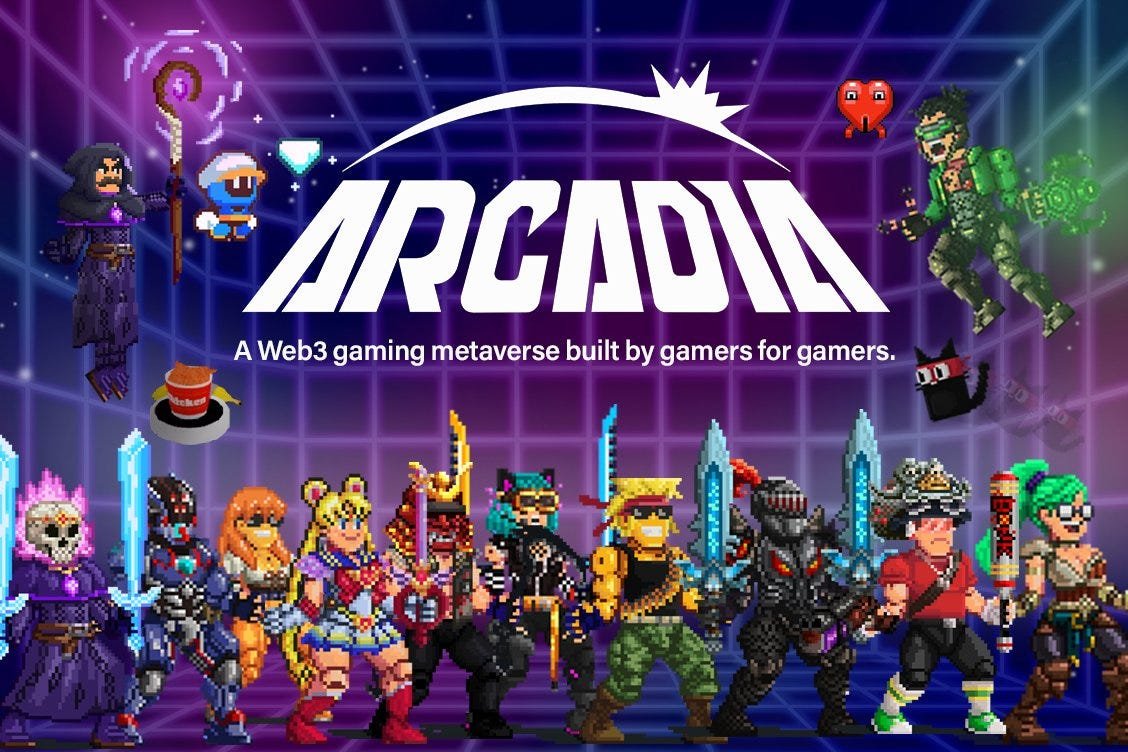
Whether building multimodal AI bots or web3 game platforms, I engineer loops that prioritize scalable unit economics, intrinsic user delight, and steady retention curves rather than speculative boom-and-bust cycles.
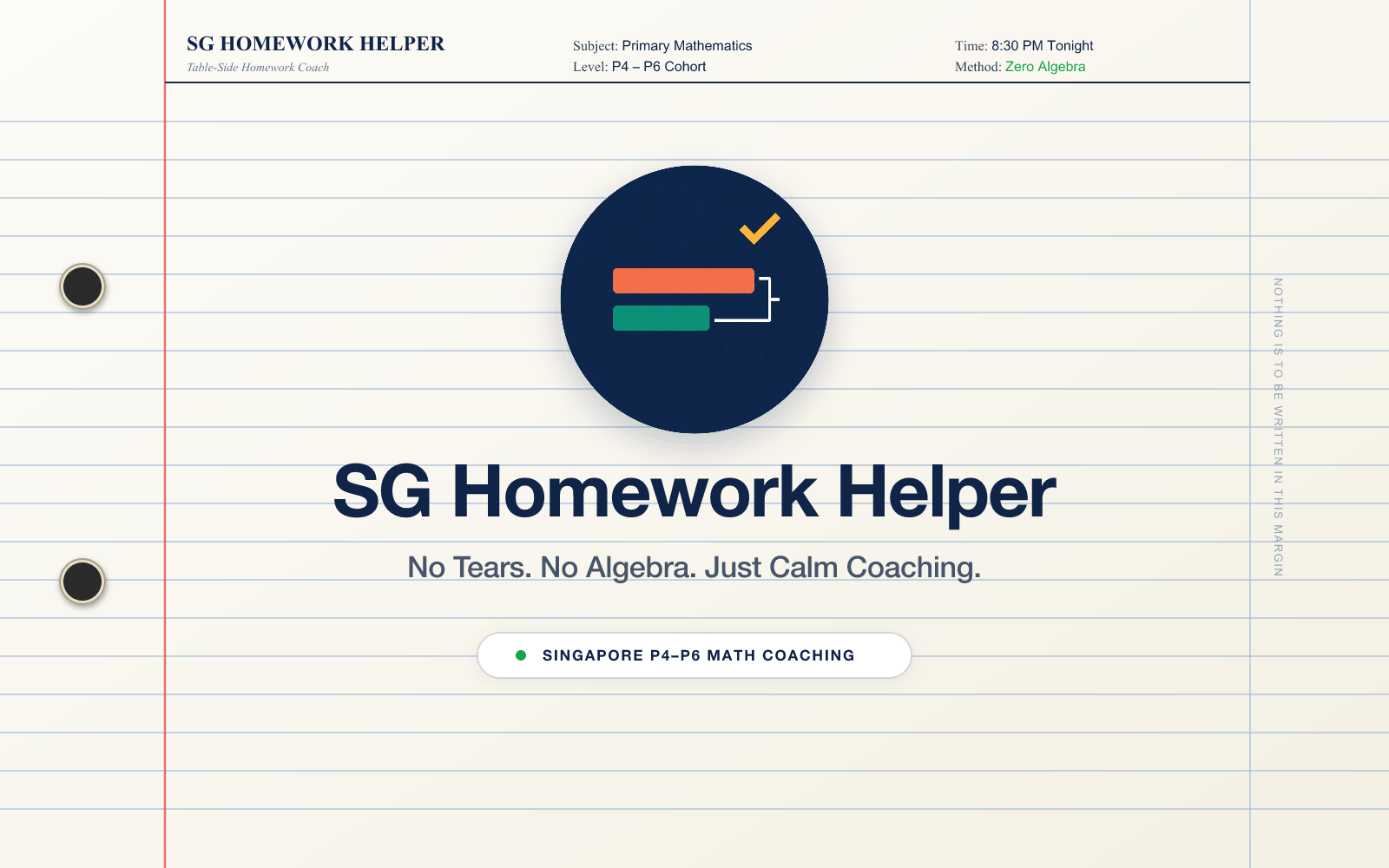
An AI table-side math homework coach delivered as a Telegram bot for Singapore Primary 4–6 parents. Translates problem sum photos into MOE-compliant visual heuristic diagrams (Model Method, Part-Whole, Comparison) and 1-sentence coaching scripts in <30 seconds, empowering parents to coach without handing screens to children.
In Singapore, parents spend S$1.4B on tuition, yet nightly primary math homework creates dining table friction. Stressed parents trying to help resort to secondary algebra ($x$ and $y$), triggering children's tears ("Teacher say cannot use this method!"). Generic LLMs hallucinate calculations and default to algebraic equations banned in Primary 4–6.
Built a multimodal AI bot (Gemini Vision, Firebase Gen 2) converting student homework photos into syllabus-verified bar models and parent coaching scripts in <30s. Designed a Dual-Solver consensus pipeline: pitting an analytical solver against a pedagogical solver verified by programmatic arithmetic and syllabus-level linters.
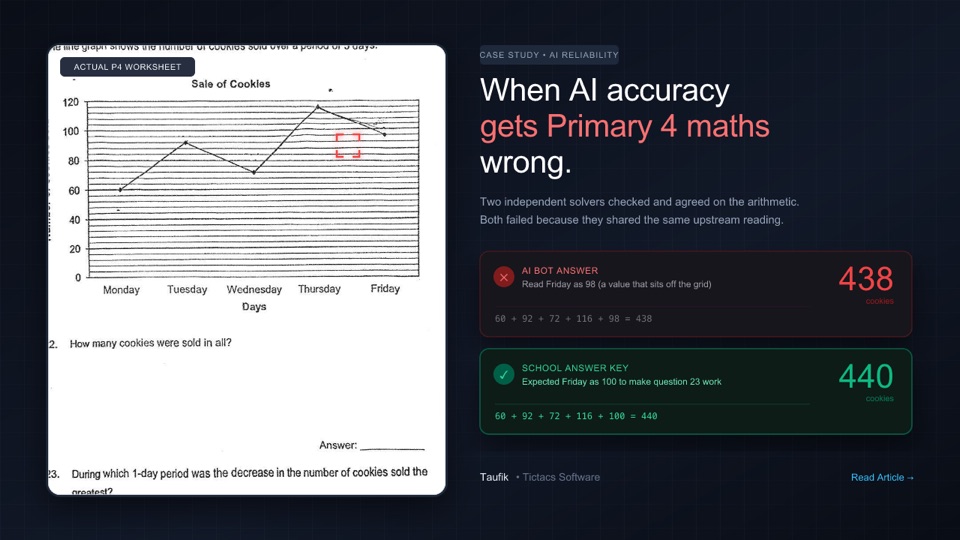
Two solvers agreeing isn't enough when both share the same upstream reading. On one Primary 4 question, both misread a value on a graph, and every arithmetic check still passed. Reading the image needs its own independent check, separate from checking the maths.
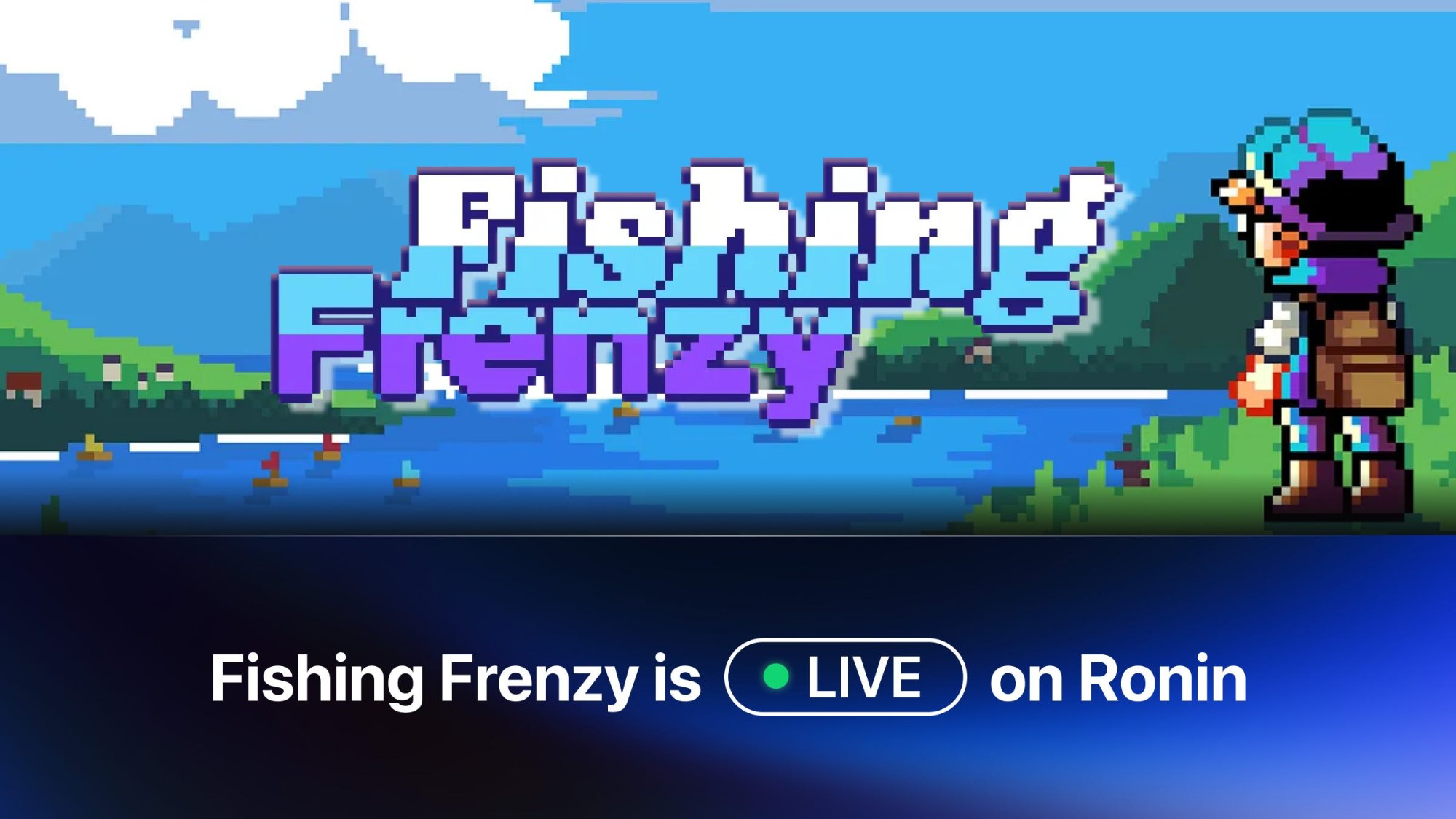
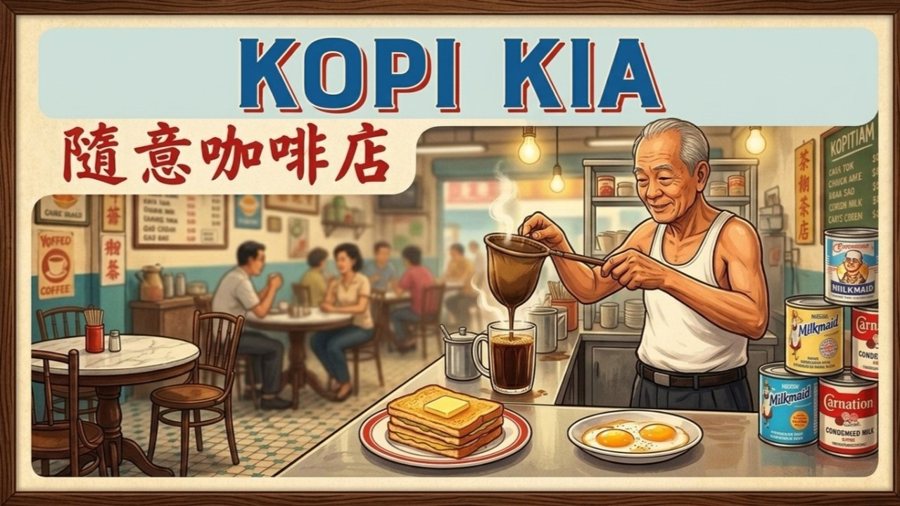
A casual simulation game set in a Singapore hawker centre, shipped to both App Stores with a public roadmap and devlog. I built it end to end with an agentic development workflow, iterating on balance and progression from a 100-user playtest.
Ship a full-featured simulation game to both Apple and Google App Stores as a solo builder without a dedicated engineering or art team.
Built it end to end leveraging agentic AI workflows (Claude Code, Antigravity), published an open public roadmap and devlog at kopikia.lol, and coordinated a 100-user playtest cohort.
Live on the App Store and Google Play, with balance and progression tuned on feedback from the 100-user playtest.
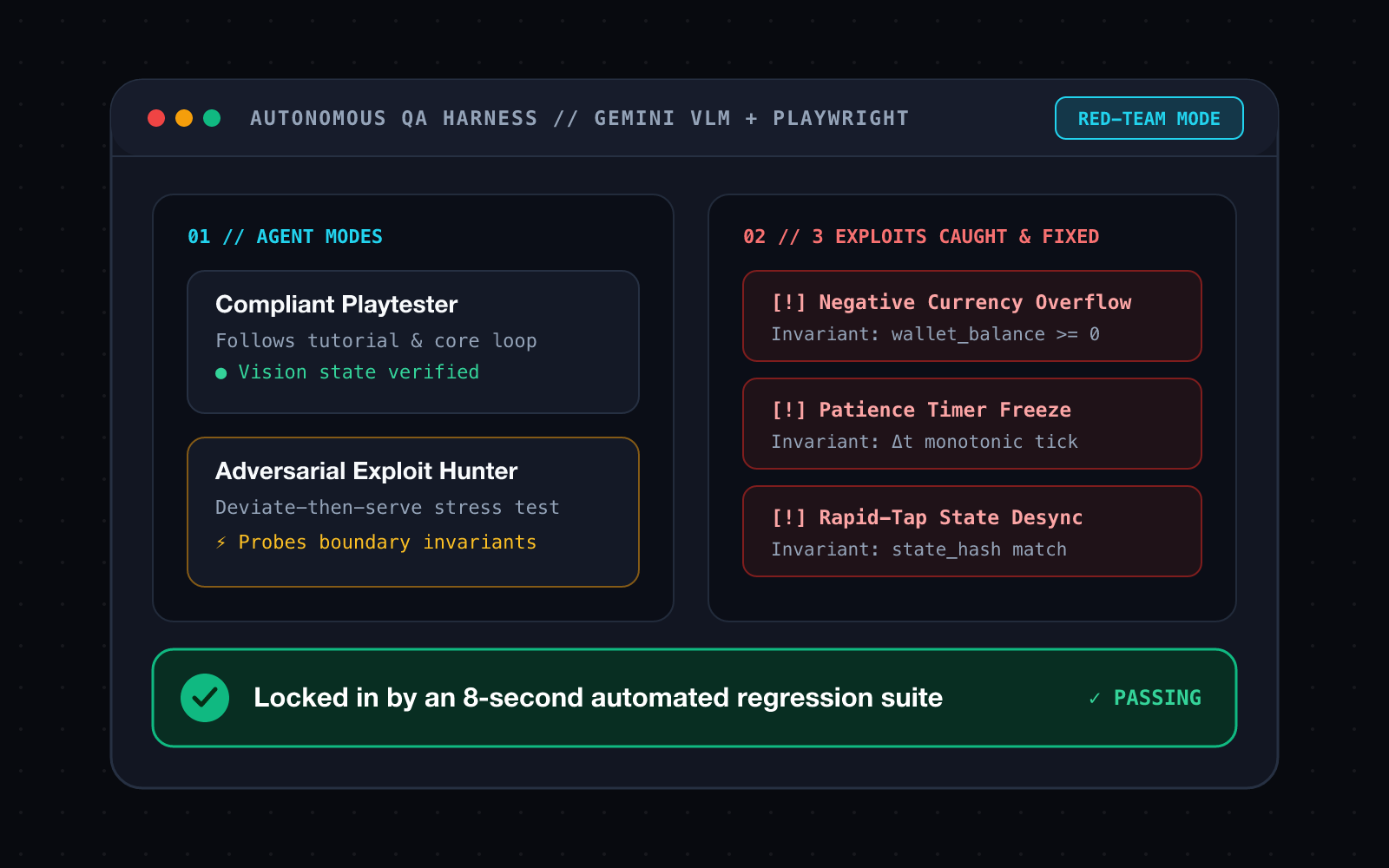
An adversarial AI agent (Gemini Flash and Playwright) that plays Kopi Kia looking for edge-case exploits. An independent invariant checker grades its runs, ensuring the agent never marks its own work.
A solo developer cannot manually test every possible state combination, rapid multi-tap exploit, or edge-case order flow that real players discover.
Constructed an adversarial testing agent that runs headless browser sessions seeking game breaks, decoupled from an independent invariant evaluator so evaluations remain objective.
Found 3 game-breaking exploits, now fixed; consolidated testing into an automated 8-second offline regression suite.
An infant care tracker I built solo with privacy by design. Caregivers join a shared room with an access code, with no accounts needed, and entries sync in real time to everyone in the room.
Caregivers need to share an infant's daily log in real time without handing over sensitive personal data or creating tedious email accounts.
Architected zero-knowledge access code rooms so no stored data can identify the child or caregivers. Learned key lessons on builder bias: anchoring navigation to user tasks rather than features built.
Shipped concept to TestFlight in under a week; reinforced deep empathy for discovery and information architecture.
A live mobile game monetised through in-app purchases. As Product Lead, I owned the vision and roadmap as it grew to 450K users and $1M in in-app revenue, working with a tech lead, 3 developers and a designer.
Bad actors created duplicate accounts to extract fraudulent reward claims, while limited developer bandwidth had to simultaneously balance new feature delivery.
Partnered with data analysts to identify behavioral abuse patterns, establishing hybrid rules-based and model-based detection. Anchored roadmap on D1/D7/D30 retention and LTV cohort funnels.
Prevented $50K in fraudulent reward extraction and removed 500+ suspicious accounts while growing game to 450K users and $1M in IAP revenue.
A mobile RPG I took through launch as Product & Operations Lead, working closely with go-to-market colleagues and keeping engineering, design and marketing aligned across Singapore, Shanghai and Hanoi.
Taking a complex mobile RPG through launch with cross-functional teams spread across three offices, differing studios, and time zones.
Aligned product delivery with launch GTM strategy, synthesized user behavior telemetry into a unified prioritized backlog, owned user segmentation, and led a 4-person pod (producer, 2 designers, junior PM).
Delivered 1M pre-registrations and $4.6M in launch revenue, with premium conversion funnels supporting $800K in peak daily transaction volume.
OP Games' two-sided gaming platform. As Senior Product Manager, I defined the SDK and API integration roadmap for 6 partner studios and owned retention and lifetime value across six live titles.
A two-sided platform dilemma: 6 external game studios needed seamless SDK integration, while cross-title player retention across six live titles required systematic improvement.
Defined the SDK and API integration roadmap, managed partner studios through developer integration, and directed 2 internal engineers. Redesigned engagement loops using cohort analysis and A/B testing.
Shortened studio integration time by two months and achieved an 18% uplift in 30-day retention across all six titles.
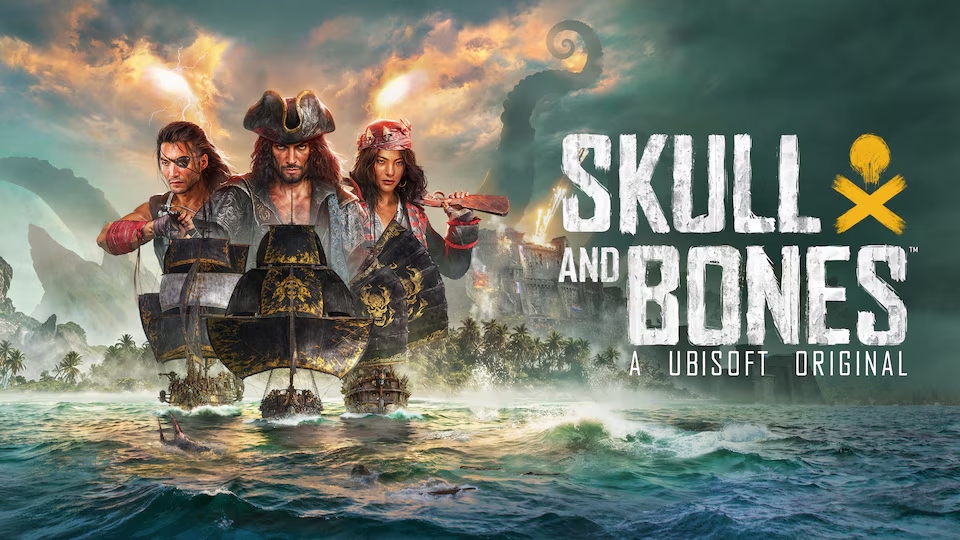
Ubisoft's open-world naval action game. I drove feature prioritisation and milestone sequencing across 7 international studios and a 200+ person team ahead of launch.
Competing feature priorities across 7 international co-dev studios and a 200+ person team ahead of a multi-million-dollar AAA launch.
Reconciled studio priorities into a single delivery roadmap, sequenced milestones, and tracked critical cross-studio dependencies to surface trade-offs to senior leadership.
Delivered aligned milestone execution across 7 worldwide studios with transparent decision trade-offs ahead of global release.

My homework bot checks every answer three separate ways, and all three checks passed on a wrong one.

Kopi Kia is finally live on the Apple App Store. What building it solo with AI-assisted development actually looked like.

Parenting is a tag-team. How I built TeamBaby, a shared baby tracker, one feature at a time.